Equip every believer to make disciples who multiply
“People trust us with their crises — and what surfaces has nowhere to go.”
Clinics, food programs, counseling, service: compassion keeps surfacing spiritual openness your team has no capacity to follow up. Your ministry can open a pathway into discipleship without abandoning its core mission — we make sure what surfaces leads somewhere.
Two ways to do this
You can run the framework without us
Identify and Connect are yours to run, and nothing in them requires a partner. Bringing us in is help with the disciple-maker side and the handoff — never the price of admission.
Run your part yourself
Use the outreach you already do to identify seekers with intentionality, and connect them to disciple makers in local churches. The method is below, in full, and it costs nothing.
See what your part isGet our help running it
When the churches near you have nobody equipped yet, or the handoff is held together by one person's memory, we bring the disciple-maker side and the tooling.
Start a conversationPrivacy and Consent Included
People give us their own information, themselves, with their own consent. Your organization never discloses anything about anyone — which means nothing you've promised a client, a board, or a funder is in play.
Most of our work so far is in Honduras — about 75 churches and 30 discovery groups. In the United States we're starting, which means the first organizations we work with will shape how this runs rather than inherit it.
Your part of the framework
All three are yours — but the middle one is a different job.
CoMission's framework is Identify, Equip, Connect. A church runs all three the obvious way. A ministry like yours runs them from somewhere a church is not — in front of people at the moment they open up. And its Equip step is different: you are not training believers yourself. You are making sure a local church nearby has trained them, so the people you find have somewhere real to go. The setup guide walks all three, step by step.
Set up your part of the frameworkWhere compassion opens a door
A simple, intentional door into follow-up
Your ministry already puts you in front of people at the moment they are most open. A discipleship gateway is how that moment leads somewhere — built into the compassion and service you already offer, rather than added on beside it.
- Compassion can surface spiritual openness.
- Discipleship gateways create simple on-ramps.
- Seeker follow-up matters as much as the service itself.
- Ordinary spaces can become disciple-making spaces.
What would we actually have to do?
As little as hanging a poster. As much as you want. You pick each piece separately.
How people are found
The smallest version
A poster on your wall — a QR code and a phone number, and nobody on your staff does anything at all.
Cards people can pick up themselves.
A card offered by whoever just prayed with them.
A question inside the intake you already do.
Each step works better than the one before it, and each one asks more of you. The step that matters most is a card handed over by someone the person already trusts — but it’s also the one we’d suggest last, not first.
How it reaches us
The smallest version
With a poster, it doesn’t — the person enters their own information on their own phone and it comes straight to us.
Mail us an envelope once a month.
Send photos of the cards whenever it’s convenient.
If you’d rather it be digital, we’ll set that up.
Nothing touches your systems unless you ask us to, and we’d rather it didn’t.
What you get back
The smallest version
Nothing, if that’s what you want.
A short note every quarter.
Your own login, so you can see what happened to the people who came through you.
Plenty of organizations would rather hand this off and not carry it, and that’s a real partnership — we won’t send you anything you didn’t ask for.
That last one matters more than it sounds. When your board or your donors ask what became of the people you served, "we served four thousand people" is a hard sentence to follow. Most ministries have no way to say what happened next. You’d have one.
Either way it's numbers and outcomes, not names — unless someone specifically asks us to tell you how they're doing.
If your funding doesn't allow overt faith activity
Then don't do any. That's not a workaround — it's the design.
Nobody on your staff raises the subject. Nobody hands anything to anyone. A poster sits on a wall, and a person who goes looking for it finds it. That's responsive, not initiated, and it's the same distinction that lets a hospital keep a chaplain.
The follow-up isn't yours either. We do it later, on our own behalf, and not in your name. And the form says plainly what it is, so nobody is surprised by who contacts them or why — we'd rather have fewer conversations than unclear ones.
Send it to your program officer before you use it. We'd rather you get a written yes than be talked into a maybe.
Running today, not a concept
Clínica de Esperanza
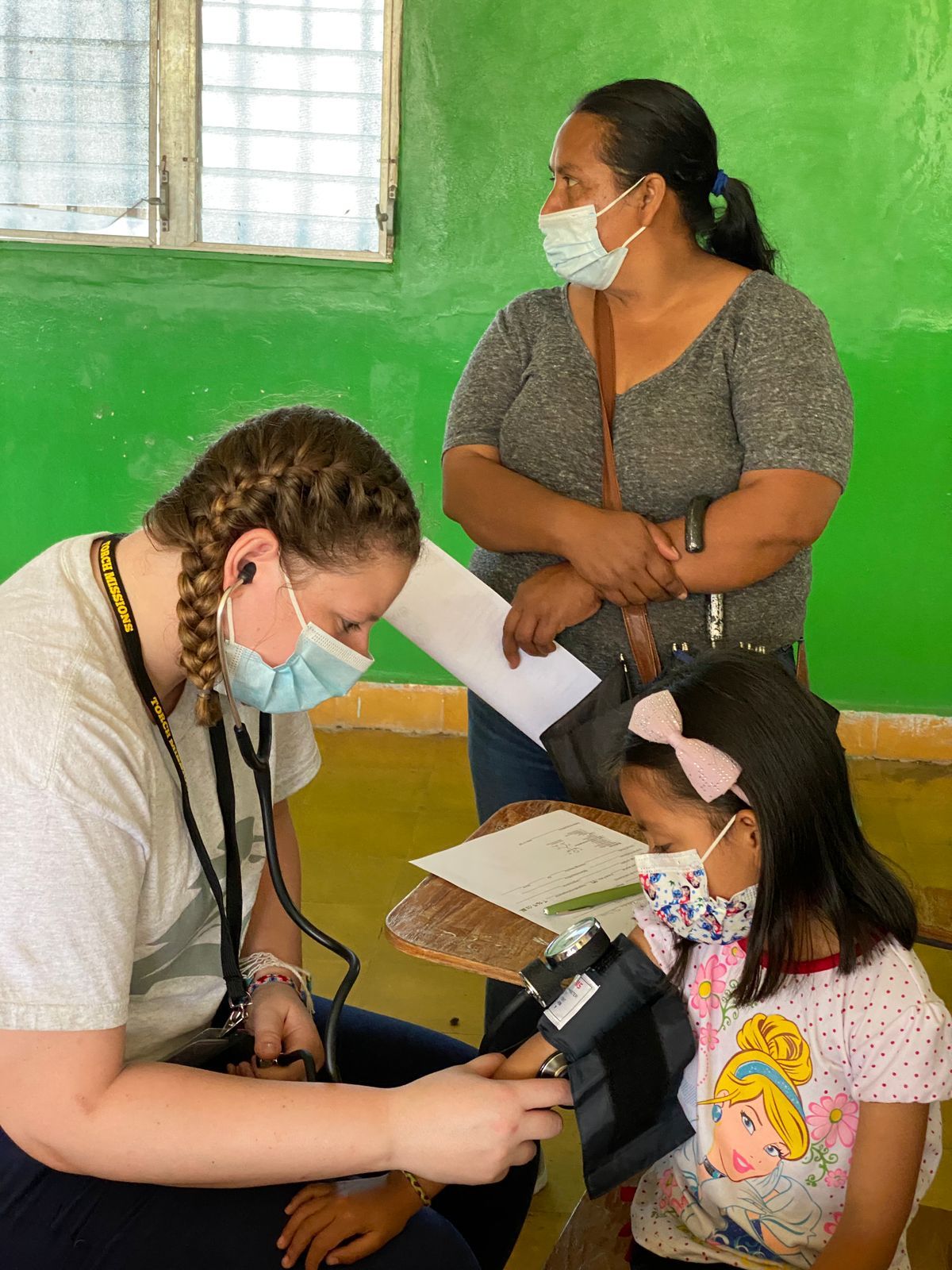
A healthcare ministry added a discipleship pathway to its work — showing how compassion and service can become an on-ramp for spiritual follow-up. Service ministries often cannot carry discipleship follow-up alone; CoMission provides the disciple-maker side and the tools to make sure surfaced seekers are actually followed up.
Whether your organization already has its own intake process or is just beginning, CoMission can plug into what you do — as an intake source, a referral partner, or a full pathway.
What actually happened
In the last twelve months, in Santa Ana
Counted August 2026
- 540
- people asked for prayer at the clinic
- 45
- of them opened a Bible with someone
- 5
- are now leading a study of their own
- 3
- generations deep — a disciple of a disciple of a disciple
Counted, not estimated. We would rather publish a small number we can stand behind than a large one we cannot.
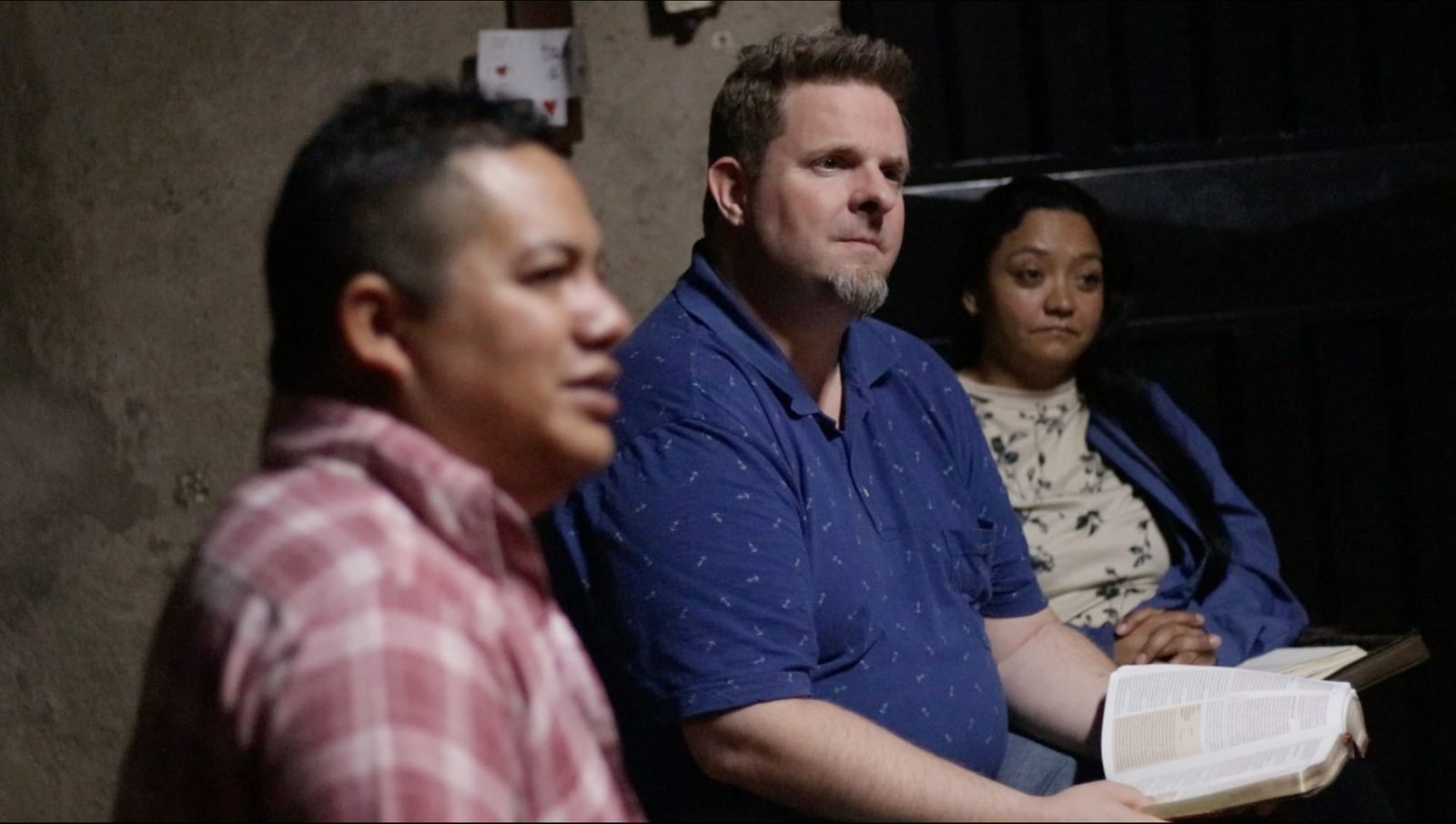
One of them, by name.
What happens next
Ninety days, one wall, no commitment past that
A conversation.
Fifteen minutes, at your place. We'll bring the poster and the form so you can read every word before you agree to anything.
We walk your space together.
Where a poster goes matters more than what it says. We look at your waiting area, and you tell us what's off limits.
It goes up.
We print it and bring it. Nothing else in your building changes.
Ninety days later, we tell you what happened
— if you want to know. How many people used it, how many asked to be contacted, how many are in a study now. Numbers only — no names, unless someone specifically asks us to tell you how they're doing. If you'd rather hand it off and not hear about it, say so and we won't send you anything.
Then you decide whether to leave it up, take it down, or do more. There's no contract and nothing to cancel.
Does this fit what you already do?
Tell us what your work already surfaces — prayer requests, intake conversations, moments of openness — and we'll help you see which shape of gateway fits. Talking implies no commitment.
Fifteen minutes, at your place. If it's not a fit you'll know in the first five.
Lead a local church rather than an organization? For churches →