For years, our outreach in Honduras looked the way a lot of outreach looks. We ran medical brigades. We built houses. We handed out food in some of the poorest communities in the country. It was good work, and I would do it again.
But in a crowd, everyone looks the same. When a long line forms for a bag of rice, you cannot tell who is quietly searching for God. You can't tell an unbeliever from a believer, or a believer from a disciple. So the harvest looked thin. We prayed, we served, and we went home wondering whether anything we had done would last.
It turns out the harvest was never thin. We just had no way to see it.
What changed
The pandemic, and my own brush with pancreatic cancer, rearranged what mattered to Pamela and me. We wanted to spend our time, our skills and our resources on things that last. So we started praying the prayer Jesus told His disciples to pray: "The harvest is plentiful, but the workers are few. Therefore, ask the Lord of the harvest to send out workers into his harvest field" (Matthew 9:37–38).
Then we started asking a different question at our events. Not "how many people did we serve?" but "who here is already looking for God?"
First it was prayer requests, through a QR code on everything we did, and then on paper forms at events. People asked for prayer, and believers prayed for them and sent those prayers back. Then, in 2024, we added one more line to the form:
"Do you want to learn how to study the Bible?"
Most of the people coming to our events checked yes. They had been asking for this all along. We had been giving them free things and a pat on the back.
That realization has stayed with me ever since. We decided we would never again let the harvest go unseen.
A living room, then a church
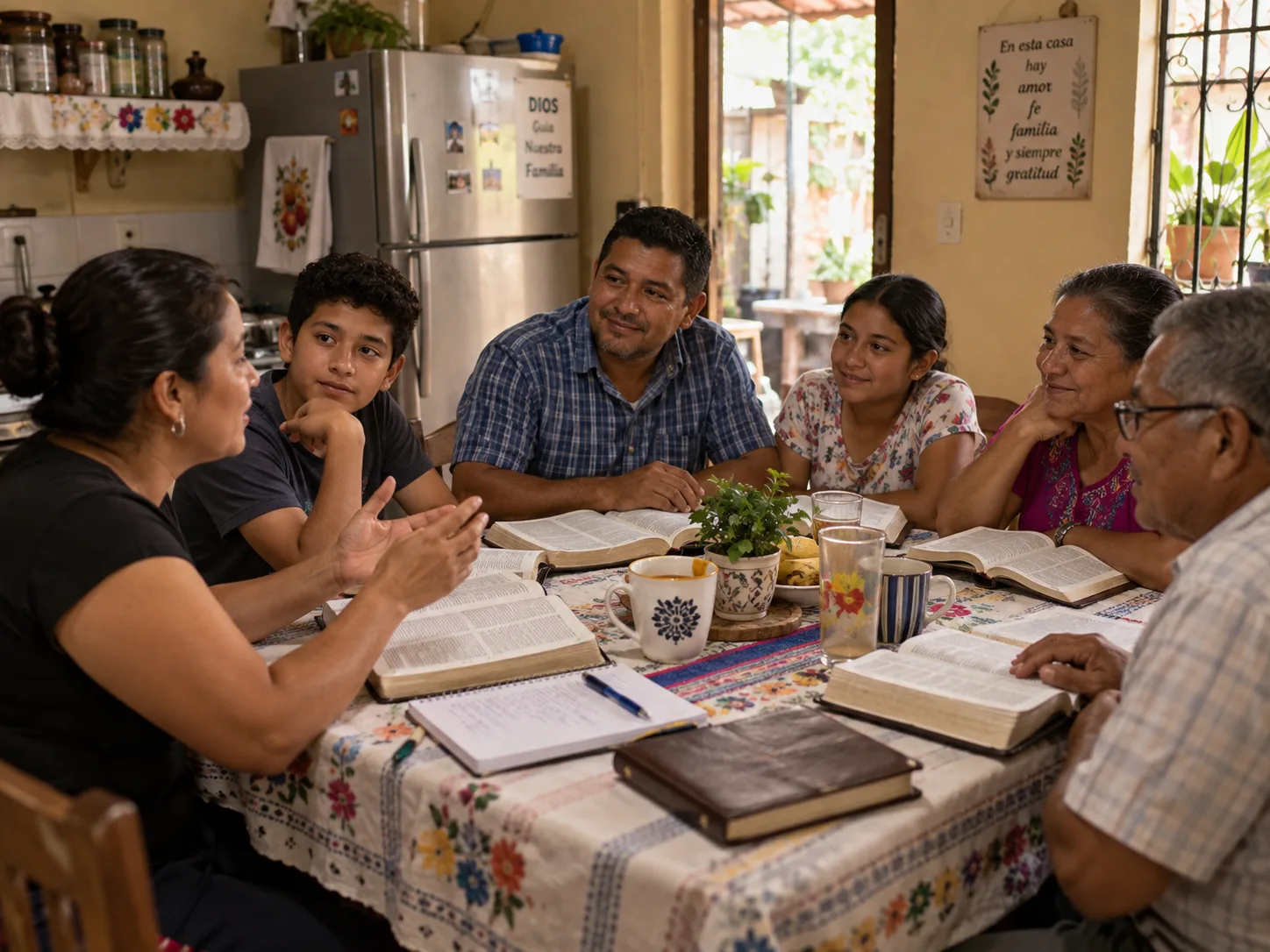
Around the same time, Pamela and I started a Discovery Bible Study in our home with neighbors and family. No lecture, no curriculum to get through. Just a passage of Scripture, a few simple questions, and the expectation that everyone would obey what they learned and share it with someone else. That group saw its first baptisms, and then it gave birth to a new group led by new believers.
But we could not be the answer for everyone who checked that box, and we shouldn't be. The people asking to study the Bible live in communities that already have churches. So in 2025 I trained a church in Ojojona in Discovery Bible Study, and we handed that church the names of people from our outreach who had asked to study the Bible.
Ordinary Christians from that church walked through a door the outreach had already opened. New groups were born, led by people who would never have called themselves teachers.
In 2026 we trained a second church. In July, a full-day workshop gathered pastors from all over Honduras, and a few weeks later a second one trained more from a remote area of Western Honduras. Churches began asking us for help faster than we could answer.
The pattern we didn't design
Looking back, we can see a pattern we didn't invent. God led us into it, one piece at a time:
- Identify. A prayer card and one question on a form showed us the people God was already drawing.
- Equip. A Bible study in a living room, and then a trained church, gave ordinary believers what they needed to open the Bible with someone.
- Connect. Handing outreach contacts to a newly trained church brought the two together: a seeker who had asked, and a believer ready to answer.
It is a cycle, not a funnel. The people who come to faith in those groups become the next believers who are equipped, and the next ones who go. You can read more about it on how it works.
Why we haven't given up on the church
Some people have told us the local church is a lost cause: that it will never wake up and make disciples, so it is better to start over somewhere else.
We see something different. Jesus is calling His Bride to repentance and obedience. When local churches in Honduras could see the people around them already asking to study the Bible, and were given simple tools to respond, they responded. Groups that meet in homes are part of how this works. Our own first Bible study met in our living room. But we will not leave the congregation behind.
So this is the work we believe God has given us: restoring the church's ability to obey the Great Commission, in Honduras and beyond. The longer version of our story is on our About page.
What you'll find here
This blog is where we will tell what we are seeing as it happens: stories from the field, lessons we are learning (often the hard way), and practical help for church leaders who want their people to make disciples who multiply.
If you lead a church and wonder whether this could work where you are, a good first step is the Discipleship Health Check. It takes a few minutes and gives you an honest picture of where your church is today. Wherever you are starting from, we would be glad to walk with you.
The harvest is plentiful. It always has been. Let's go see it together.
Byron Sommardahl